Introduction
Knowing when cards are compared makes Teen Patti easier to follow. For readers searching for Fairplay, the key distinction is simple: a final show normally settles the hand between two remaining players, while a sideshow compares two players during an ongoing hand.
A round can also end without a show when everyone except one player folds. This article explains the traditional rules, blind and seen conditions, equal hands, and practical examples. Individual game versions can differ, so these explanations should not be treated as verified Fairplay444 table rules.
What Does “Show” Mean in Teen Patti?
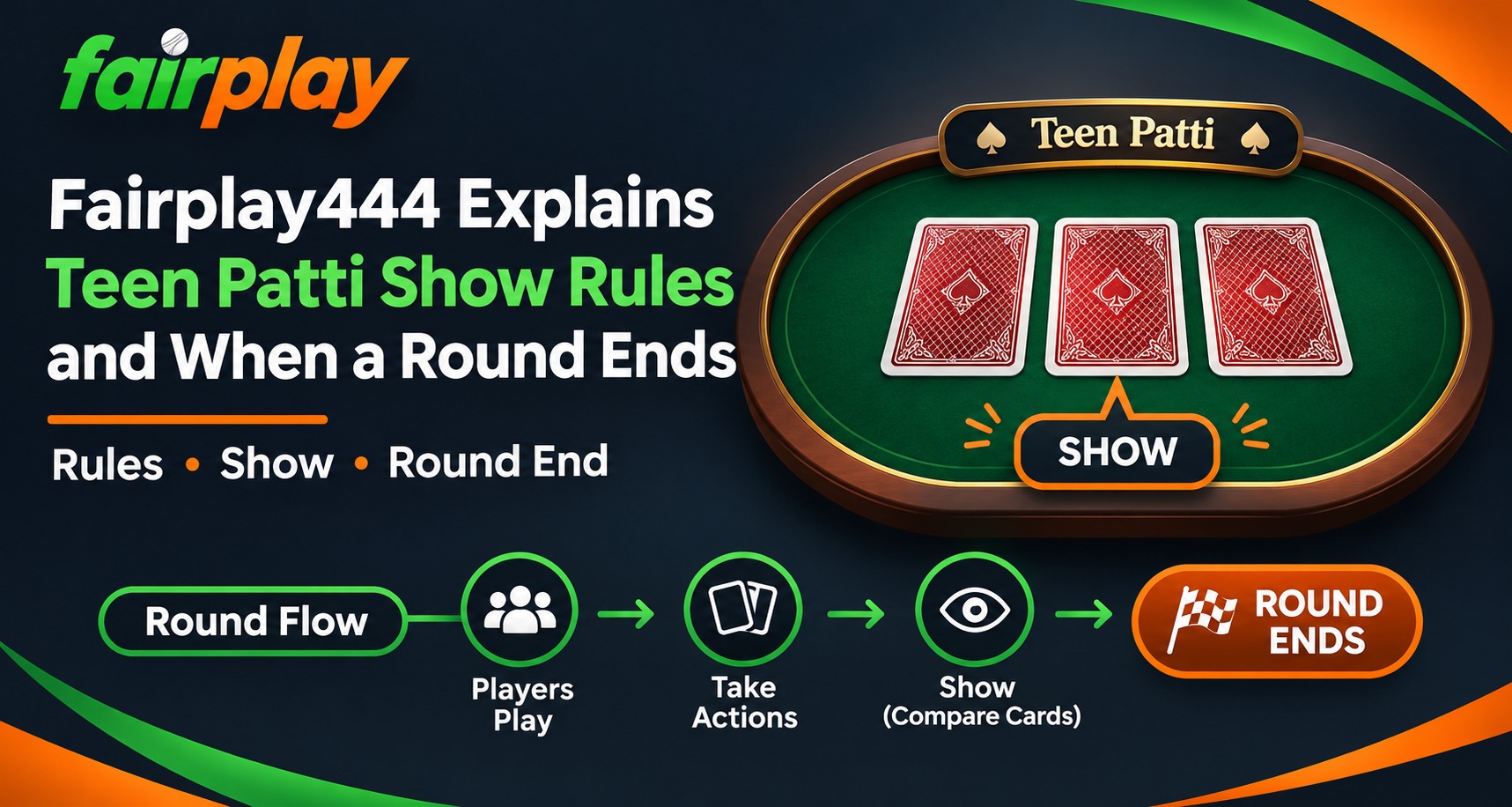
A show is the final comparison of the remaining players’ three-card hands. Under traditional rules, a player requests it on their turn after the field has reduced to two.
Both hands are revealed, their strength is compared, and the winner receives the pot. Once that comparison settles the result, the hand ends. Simply looking at your own cards does not request a show or finish the round.
Blind and Seen: What Changes?
A blind player has not looked at their cards. A seen player has checked them. These terms describe the information available to the player, rather than the strength of the hand.
The distinction matters because contribution amounts and available actions can depend on that status. Looking at your cards changes your status; it does not reveal them to opponents.
Who Can Request a Final Show?
The following table describes a traditional ruleset. “Current stake” means the table’s reference amount, which is not necessarily the last player’s full contribution.
| Remaining players’ status | Traditional show rule |
|---|---|
| Both blind | Either may request a show on their turn, paying the current stake |
| Blind requester, seen opponent | The blind player may request it for the current stake |
| Seen requester, blind opponent | The seen player cannot demand a show |
| Both seen | Either may request it on their turn for twice the current stake |
These conditions explain why two players can have different available actions during the same hand.
How a Teen Patti Show Works, Step by Step
Before interpreting a result, establish the game variant, active player count, blind or seen status, and applicable show charge.
- Count the remaining players. For a traditional final show, exactly two must remain.
- Check whose turn it is. The request follows the normal turn order.
- Confirm eligibility and cost. Use the table’s published conditions for the requester’s status.
- Compare the complete hands. Apply the relevant hand rankings and tie-breaking rules.
- Read the settled result. The awarded pot marks the end of that hand.
For anyone reading about Fairplay online, this sequence provides a useful checklist without assuming particular buttons or screen labels.
A Simple Example
Suppose two seen players remain and the current stake is 10 practice chips. Under the traditional rule above, requesting a show costs 20 chips.
One player holds three kings; the other holds three queens. Three kings win because both hands are trails, and kings rank above queens. Requesting the comparison does not give either hand extra strength.
Which Hand Wins at Show?
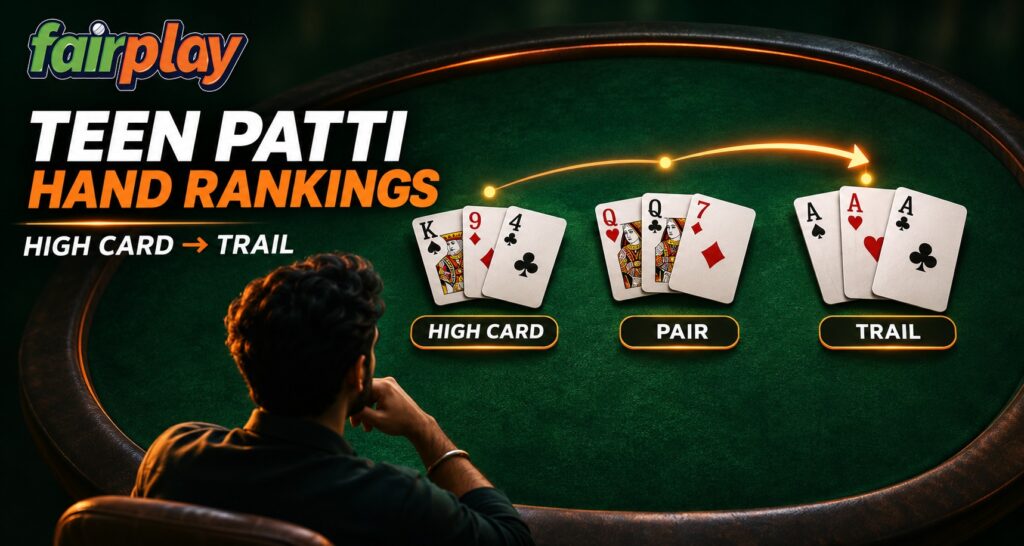
In standard Teen Patti, the main categories run from strongest to weakest:
- Trail: three cards of the same rank.
- Pure sequence: consecutive cards of one suit.
- Sequence: consecutive cards of mixed suits.
- Colour: three same-suit cards without a sequence.
- Pair: two matching ranks.
- High card: none of the combinations above.
Check the game’s sequence ordering, especially combinations involving aces. Published rules can differ on their position.
Show Versus Sideshow: The Important Difference
A sideshow is a comparison within an ongoing hand. In Octro’s published rules, a seen player can request it from the previous seen player while another player remains. The recipient may accept or decline.
An accepted comparison eliminates the weaker hand; a declined request leaves both players active. Therefore, a sideshow does not automatically settle the entire pot.
Read More : Best IPL Betting Markets Explained for Beginners (2026 Guide)
Conclusion
Teen Patti becomes clearer when you separate folding, sideshows, and final shows. Before following a hand, check player status, comparison costs, rankings, and table-specific exceptions. That small preparation helps you understand exactly why play continues or a result is settled.
FAQs
Can a round end without showing cards?
Yes. When every opponent folds, the sole remaining player wins without needing a final comparison.
What happens if both hands are equal?
Under traditional show rules, the player who requested and paid for the show loses an exact tie.
Does becoming seen end the round?
No. Checking your cards changes your playing status; the hand can continue.
Can more than two players reveal cards together?
Some versions allow a forced comparison at a pot limit. Octro documents this exception, so check the particular table rules.